


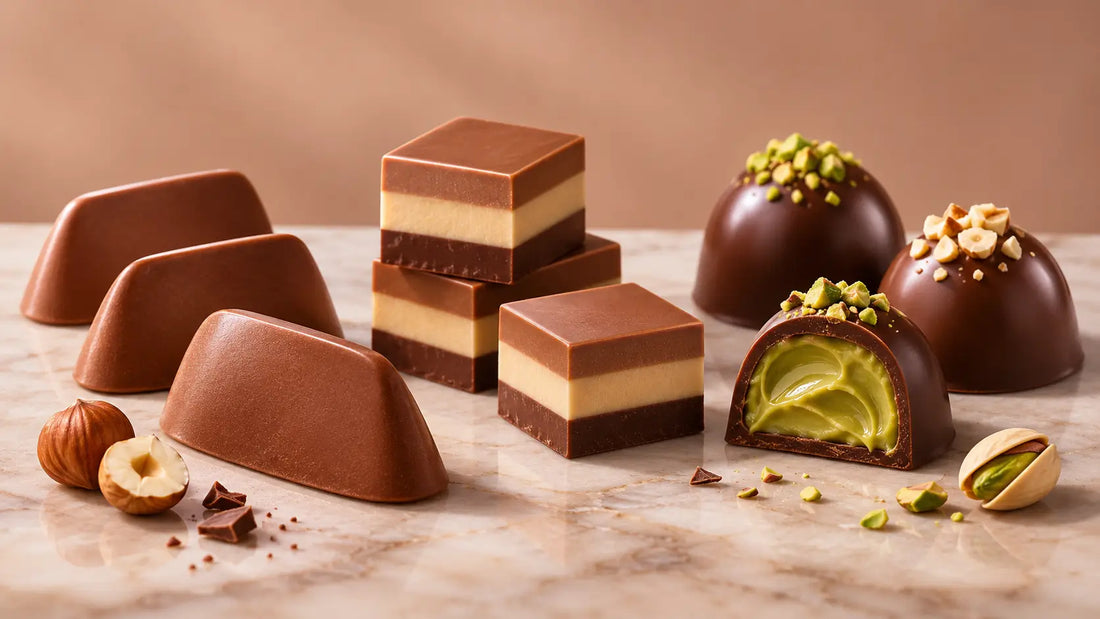
Italian chocolates come in several distinct styles. Giandujotti are small Piedmont chocolates made with hazelnuts and cocoa; cremini are layered chocolates, traditionally made with gianduja; and pralines are a broader category that includes filled chocolates and chocolate-coated nuts. Understanding these differences makes it easier to choose chocolates by their texture, filling and flavour.
What Makes Italian Chocolate Different?
Italian chocolate is shaped by regional recipes and local ingredients. One of the best-known examples comes from Piedmont, a region in north-western Italy associated with the combination of chocolate and hazelnuts.
This combination is known as gianduja. It is a smooth mixture of hazelnuts, sugar and cocoa, used in different forms of Italian confectionery. You will find it in traditional Giandujotti, layered Cremini and other chocolate specialities.
Italian chocolate is not one single type or recipe. The ingredients, shape, filling and texture can vary between regions and individual producers. Learning a few of the best-known varieties is a useful starting point.
3 Popular Types of Italian Chocolates You Should Know
1. Giandujotti: Piedmont's Hazelnut Chocolate
Giandujotti are small, traditionally shaped chocolates associated with Piedmont. Their defining characteristic is the combination of chocolate and hazelnut, which gives them a smooth, rich flavour.
They are closely connected to gianduja, the hazelnut-and-cocoa mixture that is also used in spreads, fillings and other chocolate preparations.
Traditional Giandujotti are often recognised by their distinctive boat-like shape. Their texture is generally smooth and firm, while the hazelnuts provide a characteristic nutty flavour.
Baratti & Milano Dark Giandujotto combines dark chocolate with Italian hazelnuts. Its product description lists hazelnuts as 31% of the ingredients.
2. Cremini: Italian Layered Chocolates
Cremini are layered Italian chocolates traditionally associated with gianduja and hazelnut paste. A classic Cremino has three layers: two outer layers of gianduja surrounding a central layer of hazelnut paste.
This layered construction gives Cremini a different character from a solid chocolate. Each layer contributes to the overall flavour and texture, creating a combination of chocolate and nutty notes.
Modern versions can use different chocolate combinations and flavour variations. The number of layers and ingredients can therefore differ between products.
-
Baratti & Milano Cremino 4 Emozioni is described as a selection combining white, gianduja and dark chocolate.
-
Baratti & Milano Cremino Limoncello combines white chocolate and hazelnut paste with a Limoncello-inspired lemon flavour.
3. Italian Pralines: Filled and Chocolate-Coated Treats
Praline is a broader term than Giandujotto or Cremino. Depending on the tradition and recipe, it can describe a nut coated in caramelised sugar or chocolate, or a chocolate confectionery with a filling.
Italian pralines come in different combinations of chocolate shells and centres. Fillings may include nuts, creams and other flavourings. Some varieties also contain alcoholic ingredients, so checking the product description and ingredient list is important.
Here are examples of different praline styles:
Pistachio pralines:
Baratti & Milano Milk Chocolate Praline with Pistachio Filling combines a milk chocolate shell with a pistachio filling and caramelised grains.
Cuneesi al Rum:
Cuneese Pralines are described as having a dark chocolate shell with rum custard cream and crisp wafers. This is an example of a praline with an alcoholic flavouring.
Coffee and cream liqueur pralines:
Baratti & Milano Subalpino Gianduja Pralines combine gianduja chocolate with coffee and cream liqueur. The product's ingredient information lists an alcoholic infusion.
Giandujotti vs Cremini vs Pralines: What Is the Difference?
Although these Italian chocolates can share ingredients such as chocolate and hazelnuts, they are not the same confectionery.
|
Type |
What defines it |
Typical character |
|
Giandujotti |
Small chocolates made with a gianduja-style hazelnut and cocoa mixture |
Smooth, rich and nutty |
|
Cremini |
Layered chocolates, traditionally made with gianduja and hazelnut paste |
Distinct layers with a chocolate and nut flavour |
|
Pralines |
A broad category that includes filled chocolates and chocolate-coated nuts |
Varies according to the shell and filling |
|
Gianduja |
A smooth mixture of hazelnuts, sugar and cocoa |
Creamy, nutty chocolate mixture used in other confectionery |
The main distinction is that gianduja is an ingredient or chocolate mixture, Giandujotti are a particular style of chocolate made with it, Cremini are recognised by their layered construction, and pralines are a broader category of confectionery.
How to Choose the Right Italian Chocolate
The best variety depends on the flavours and textures you enjoy.
-
For a hazelnut-led chocolate: Explore Giandujotti. Their combination of chocolate and hazelnuts makes them a natural choice for hazelnut lovers.
-
For layered chocolate: Try Cremini. Their different layers offer a combination of chocolate and nut-based flavours.
-
For a filled centre: Explore Italian pralines. They come in different combinations, including pistachio, cream and other fillings.
-
For a stronger or more distinctive flavour: Look at pralines made with coffee or liqueur-based ingredients, and check the label for alcohol content.
If you are buying chocolates as a gift, consider the recipient's flavour preferences and any dietary requirements before choosing an assortment.
What to Check Before Buying Italian Chocolates Online
Italian chocolates can contain several ingredients and allergens, so it is worth checking the product information before placing an order.
1. Check the ingredients: Look at the ingredient list to understand whether the chocolate contains hazelnuts, pistachios, almonds, milk, cocoa or other fillings.
2. Check allergen information: Nut-based chocolates and pralines may contain or have traces of other nuts. Milk and soy ingredients may also be present. Always read the specific product's allergen statement.
3. Check whether the filling contains alcohol: Some pralines use rum, liqueur or other alcoholic ingredients. Do not assume that every chocolate filling is alcohol-free.
4. Compare the chocolate type: Dark, milk and white chocolate have different flavour profiles. Consider the type of chocolate used in the shell and filling when choosing a product.
5. Read the product-specific dietary information: Dietary claims such as gluten-free should be checked on the individual product listing. Do not assume that every Italian chocolate or praline has the same dietary suitability.
Explore Italian Chocolates at Maargo Food and Wine
From Piedmont-style hazelnut chocolates to layered Cremini and filled pralines, Italian confectionery offers a range of flavours and textures to explore.
At Maargo Food and Wine, you can browse a selection of Italian chocolates from Baratti & Milano, including Giandujotti, Cremini and different praline varieties.
Explore the buy Italian chocolates to compare the available varieties and find chocolates that suit your preferences.
Product selection and availability can change, so check each product page for its current ingredients, allergen information and availability before ordering.
Frequently Asked Questions
1. What are the most popular types of Italian chocolates?
Some well-known Italian chocolate varieties include Giandujotti, Cremini, gianduja-based chocolates and pralines. Each has a different preparation: Giandujotti are small hazelnut chocolates, Cremini are layered, and pralines can have different fillings or chocolate coatings.
2. What is the difference between Gianduja and Giandujotti?
Gianduja is a smooth mixture made from hazelnuts, sugar and cocoa. Giandujotti are individual chocolates made using a gianduja-style mixture. In simple terms, gianduja is the chocolate preparation, while Giandujotti are a type of confectionery made with it.
3. What are Cremini chocolates made of?
Traditional Cremini chocolates are made with two layers of gianduja surrounding a central layer of hazelnut paste. Modern versions can use different chocolate types and flavour combinations, so ingredients vary by product.
4. Are Italian pralines always filled with nuts?
No. Italian pralines can include chocolate-coated nuts or chocolates with different types of fillings. Depending on the recipe, a filling may contain nuts, creams or other flavourings. Check the ingredient list to identify the specific filling.
5. Do Italian chocolates contain alcohol?
Not all Italian chocolates contain alcohol. Some pralines use ingredients such as rum or liqueur, while many Giandujotti and Cremini are made without these flavourings. Always check the product's ingredient list if you avoid alcohol.
6. What is the best Italian chocolate for hazelnut lovers?
Giandujotti and traditional gianduja-based Cremini are good varieties to explore if you enjoy hazelnut and chocolate together. Check the ingredients of each product to compare the hazelnut content and other ingredients.